
23 Jun 2026
Finding the perfect travel companion starts with knowing how to choose luggage bag options that balance durability, style, and functionality. Whether you are embarking on a quick weekend getaway or a month-long international expedition, the right bag can make or break your travel experience. A poorly chosen suitcase can lead to unnecessary stress at the airport, damaged belongings, or physical strain. In this comprehensive guide, we will walk you through the essential factors—from material science to wheel types—to ensure you invest in a piece of luggage that lasts for years. Let's explore how to make an informed decision based on your specific travel needs.

One of the first decisions when learning how to choose luggage bag materials is deciding between hard-shell and soft-shell. Hard-shell luggage, typically made from polycarbonate or ABS, offers superior protection for fragile items and is generally water-resistant. On the other hand, soft-shell luggage, usually crafted from ballistic nylon or polyester, provides flexibility and often includes external pockets for quick access to travel documents. While hard shells are great for protecting electronics, soft shells are often preferred by those who tend to overpack, as they can slightly expand to accommodate extra souvenirs.
Pro Tip: If you frequently travel to rainy destinations, a hard-shell case is your best bet to keep your clothes bone-dry without needing an extra rain cover.
Size matters immensely when considering how to choose luggage bag dimensions. You must align your bag size with airline regulations to avoid expensive gate fees. Generally, luggage is categorized into three main sizes: Carry-on, Medium, and Large. A carry-on is ideal for short trips (1-4 days), while a large checked bag is necessary for extended stays or family travel. It is also vital to consider the weight of the bag itself; a heavy suitcase reduces the amount of clothing you can pack before hitting the airline's weight limit.

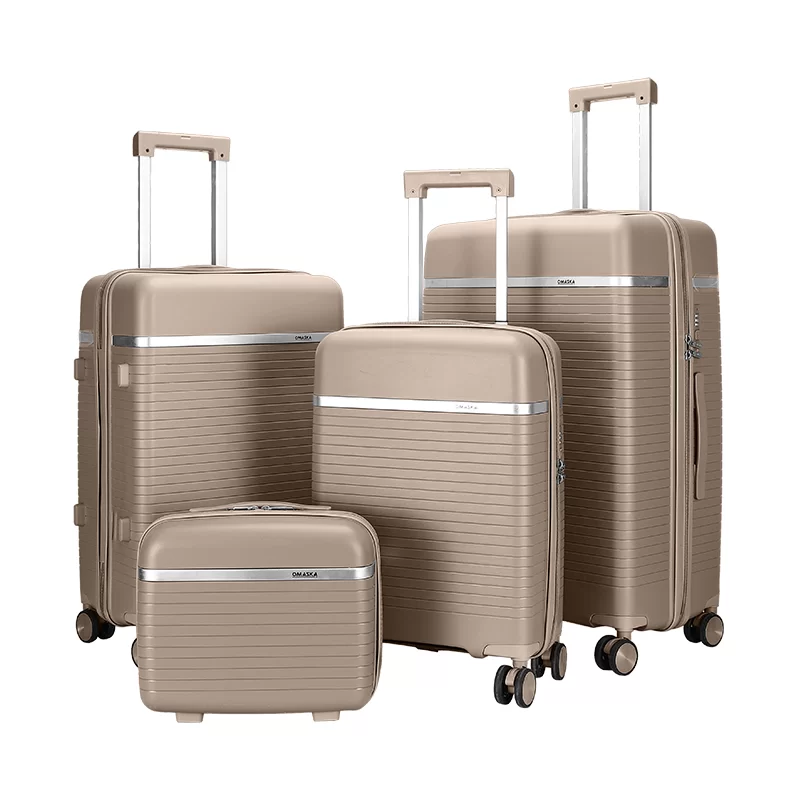
Beyond the exterior, the "small" details determine the longevity of your investment. When you research how to choose luggage bag features, pay close attention to the wheels and handles. Spinner wheels (4 wheels) allow for 360-degree movement, making navigation through crowded airports effortless. In contrast, two-wheel rollers are more stable on uneven pavement. Additionally, look for TSA-approved locks to ensure security without risking damage from customs inspections. A high-quality telescoping handle should feel sturdy and not wobble excessively.
Many travelers forget to look inside when considering how to choose luggage bag layouts. A bag with a single large compartment often leads to a chaotic mess by day two of your trip. Look for luggage with compression straps to keep clothes in place and divided compartments to separate clean laundry from dirty items. High-end bags often include mesh pockets for smaller accessories like chargers and toiletries, which saves you from needing multiple small pouches.
Interior Checklist:
• Cross-straps for stability
• Zipped divider for organization
• Mesh pockets for visibility
• Soft lining to prevent fabric snags
To truly master how to choose luggage bag durability, you must understand the chemistry of the materials. Polycarbonate is widely regarded as the gold standard for hard-shell bags because it is flexible enough to absorb impact without cracking. ABS is cheaper and harder but more prone to shattering under extreme pressure. For soft-shell enthusiasts, Ballistic Nylon is the peak of durability, originally developed for military use to resist tears and abrasions.
Knowing how to choose luggage bag is an investment in your peace of mind. By carefully considering the material, size, and specialized features like TSA locks and spinner wheels, you can ensure that your belongings remain safe regardless of the destination. Remember that the "best" bag is the one that fits your specific travel habits—whether that's a lightweight carry-on for business trips or a rugged hard-shell for global adventures. Choose quality over price to avoid the hassle of replacements every few trips.
For most travelers, yes. Spinner wheels allow you to push the bag beside you, significantly reducing the strain on your wrist and shoulder. This is especially helpful in airports with smooth floors. However, if you frequently travel through cobblestone streets or sandy paths, a 2-wheel roller might be more durable as the wheels are typically larger and more robust, allowing them to glide over bumps more easily than small spinner wheels.
If you are looking for a hard-shell, Polycarbonate is the most durable because it flexes under pressure rather than cracking. For those who prefer fabric, Ballistic Nylon is unmatched in its resistance to punctures and abrasions. When selecting your bag via the Omaska Factory guidelines, always check the material grade to ensure it can withstand the rough handling typical of airport baggage systems.
The general standard for carry-on luggage is approximately 22 x 14 x 9 inches (56 x 35 x 23 cm), but this varies by airline. The best way to verify is to check your specific airline's website. When measuring your bag, remember to include the wheels and handles in the total height and width, as these are what airline staff measure during boarding. If your bag is "expandable," keep in mind that using the expansion zipper may push the bag over the size limit.
Yes, they are highly recommended. TSA (Transportation Security Administration) locks allow airport security officers to open your bag using a master key if they need to inspect its contents. If you use a standard non-TSA lock and security deems an inspection necessary, they are authorized to cut or break your lock to gain entry. Using a TSA-approved lock ensures your bag remains secure while allowing legal access without destroying your property.


Hit enter to search or ESC to close


If you are interested in our products, you can choose to leave your information here, and we will be in touch with you shortly.


