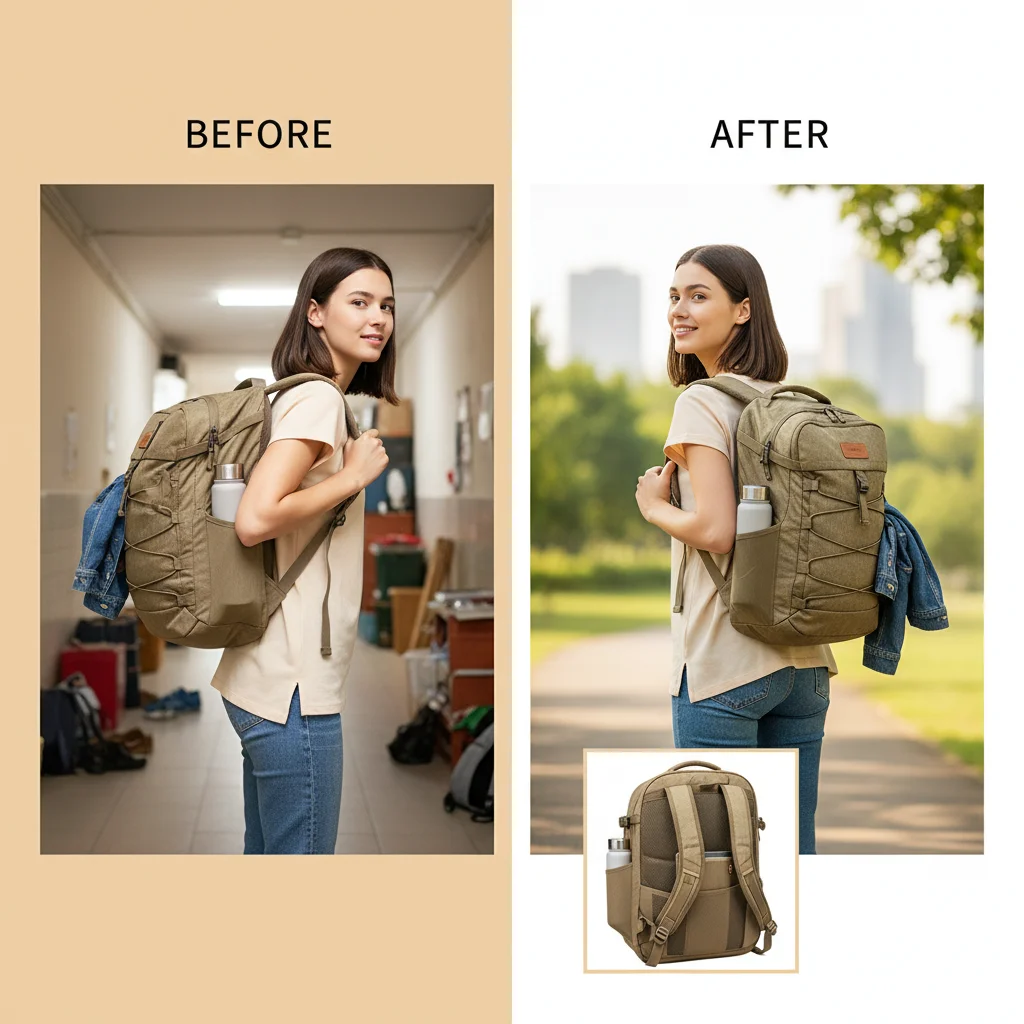
In the competitive landscape of corporate gifting, promotional merchandising, and educational supply chains, the demand for bulk blank backpacks has surged as brands seek versatile canvases for their visual identities. These unbranded carriers provide a strategic foundation for businesses to scale their product lines without the overhead of custom initial tooling, allowing for rapid adaptation to market trends and seasonal shifts.
Globally, the luggage and bag manufacturing sector has evolved toward a "modular" approach, where high-quality blanks serve as the primary inventory for a wide array of secondary customizations. From screen printing and embroidery to heat transfer and leather patching, the utility of a blank backpack lies in its neutrality, offering a professional standard that caters to diverse industries including hospitality, academia, and corporate logistics.
Understanding the nuances of sourcing bulk blank backpacks—from material density and stitch reinforcement to ergonomic design—is essential for procurement managers aiming to balance cost-efficiency with end-user satisfaction. By focusing on these core parameters, businesses can ensure that their branded final products are not only visually appealing but also durable enough to withstand the rigors of daily use.

Global Market Dynamics of Blank Backpacks
The global trade of bulk blank backpacks is intricately linked to the rise of the "Print-on-Demand" (POD) economy and the expansion of corporate identity programs. According to recent industry trends in the luggage and bag manufacturing sector, there is a significant shift toward sourcing high-grade, unbranded inventory that complies with ISO quality standards, ensuring that the base product can support heavy industrial customization without compromising structural integrity.
This market is driven by the need for agility. Companies no longer want to commit to a single design for five years; instead, they procure blank stock and apply time-sensitive graphics. This reduces waste and allows for leaner inventory management, effectively solving the challenge of overstocking outdated branded merchandise while maintaining a steady supply of functional carry-all solutions.
Technical Definitions and Industry Standards
In professional manufacturing terms, bulk blank backpacks refer to fully assembled carrying bags that are produced without any external branding, logos, or unique identifiers. These products are designed as "white-label" goods, meaning they are engineered to meet a universal standard of quality that makes them suitable for a wide range of subsequent branding techniques, from high-density embroidery to silicone printing.
The connection to modern industry is profound; these blanks are the "raw materials" of the promotional world. By standardizing the dimensions, zipper types, and fabric weights (typically measured in Denier), manufacturers ensure that customization houses can predict exactly how a logo will sit on the fabric and how the material will react to heat presses or ink solvents.
Furthermore, in humanitarian contexts, these blanks are often used for rapid-deployment kits. When NGOs need to distribute educational supplies in disaster-stricken areas, sourcing unbranded, durable backpacks allows them to focus on utility and speed of delivery rather than aesthetic branding, ensuring that essential tools reach students efficiently.
Core Components of High-Quality Blanks
When evaluating bulk blank backpacks, durability is the primary metric. This involves analyzing the tensile strength of the polyester or nylon fabrics and the reinforced stitching at stress points, such as the shoulder strap attachments. A high-quality blank must maintain its shape even when loaded to capacity, preventing the "sag" that often characterizes low-end wholesale options.
Scalability is another critical factor. This refers to the ease with which a blank can be adapted for different markets. A well-designed blank backpack features a "clean" surface area—minimalist seams and smooth panels—which maximizes the usable space for corporate logos, ensuring that the final branded product looks intentional and professional.
Finally, cost-efficiency must be balanced with material ethics. The industry is moving toward recycled PET (rPET) fabrics, which allow companies to purchase bulk blank backpacks that not only save on unit costs but also align with Global ESG (Environmental, Social, and Governance) goals, adding a layer of sustainable value to the end consumer.
Economic Scalability and Cost Efficiency
The procurement of bulk blank backpacks allows for a dramatic reduction in per-unit costs through economies of scale. By ordering in bulk, businesses bypass the expensive "setup fees" associated with custom-molded components, instead leveraging the manufacturer's existing production lines to secure a lower base price.
This economic model is particularly beneficial for growing enterprises that need to test different market segments. For instance, a company can buy a large volume of black blanks and split them between three different design themes, reducing the risk associated with betting on a single custom design.
Performance Comparison of Bulk Blank Backpacks Sourcing Methods
Diversified Global Applications
The application of bulk blank backpacks spans across various high-impact sectors. In the education sector, universities frequently procure these blanks to create "Freshman Welcome Kits," where a standardized bag is customized with the college crest. This ensures a cohesive campus identity while keeping costs manageable for the administration.
In the corporate world, tech giants often use blanks for internal employee onboarding. By utilizing high-quality blanks, they can quickly pivot their branding to match new product launches or corporate re-brands without needing to discard thousands of pre-printed bags, thus promoting a more sustainable approach to corporate merchandising.
Long-Term Value and Brand Reliability
Investing in premium bulk blank backpacks offers a logical advantage: reliability. When a brand puts its logo on a bag, the bag becomes a physical representation of that brand's quality. If a cheap blank rips within a month, the customer associates that failure with the brand, not the anonymous manufacturer. Therefore, selecting blanks with high-grade zippers and water-resistant coatings is a strategic move in brand protection.
Beyond the logic of durability, there is an emotional angle. A well-constructed bag provides the user with a sense of security and dignity. Whether it is a student carrying their only textbooks or a professional transporting a laptop, the tactile feel of the fabric and the smoothness of the operation instill trust in the entity that provided the bag.
From a financial perspective, the long-term value is found in the reduction of replacement costs. Durable blanks lead to lower return rates and higher customer satisfaction, ensuring that the initial investment in bulk procurement pays dividends through enhanced brand loyalty and reduced waste.
Future Innovations in Bag Manufacturing
The future of bulk blank backpacks is being shaped by the integration of "smart" materials. We are seeing the emergence of fabrics with embedded RFID-blocking pockets and solar-charging panels integrated directly into the blank's architecture. This allows wholesalers to provide "tech-ready" blanks that can be branded for the modern digital nomad.
Sustainability is the other major driver. The industry is transitioning toward a circular economy, where blanks are made from 100% ocean-bound plastics. Automation in the cutting and sewing process is also reducing human error, ensuring that every single bag in a shipment of ten thousand is identical in dimension, which is crucial for automated screen-printing machines.
Furthermore, the digital transformation of the supply chain—using blockchain for material traceability—means that buyers of bulk blank backpacks can prove the ethical origin of their products, adding a layer of transparency that is increasingly demanded by Gen Z and Millennial consumers.
Comparison of Modern Material Innovations for Bulk Blank Backpacks
| Material Type | Durability Score (1-10) | Eco-Friendliness | Customization Ease |
|---|
| Recycled Polyester (rPET) | 8 | Excellent | High |
| Ballistic Nylon | 10 | Moderate | Medium |
| Organic Cotton Canvas | 7 | High | Very High |
| Vegan Leather (PU) | 6 | Low | Medium |
| Ripstop Polyester | 9 | Moderate | High |
| TPE Coated Fabric | 8 | Moderate | Low |
FAQS
Lead times typically vary based on the quantity and material. For standard stock, delivery can take 2-4 weeks. However, for custom-material blanks (like specific rPET weights), it can take 6-10 weeks. We recommend planning procurement at least three months ahead of your branding deadline to account for shipping and customs.
Yes, most professional manufacturers provide sample blanks. It is highly recommended to test the sample with your specific branding method (e.g., embroidery or screen printing) to ensure the fabric tension and ink absorption meet your quality standards before finalizing a large-scale purchase.
Polyester and nylon blends are generally excellent for heat-press applications, provided the temperature is regulated to avoid scorching. For those seeking a more natural look, high-density cotton canvas blanks provide the most stable surface for heat transfers, resulting in less shrinkage and better adhesion.
Absolutely. The industry has shifted toward sustainability, offering blanks made from recycled PET bottles, organic cotton, and biodegradable polymers. These options not only reduce the environmental footprint but also enhance the perceived value of your brand among eco-conscious consumers.
Focus on three technical markers: the Denier (D) of the fabric (higher usually means stronger), the type of zippers used (YKK is the gold standard), and the presence of "bar-tack" stitching at the strap joints. Requesting a technical spec sheet from the supplier will give you the data needed to verify durability.
Sea freight is the most economical option for large volumes. To further reduce costs, many suppliers offer "vacuum packing," which compresses the blank backpacks to reduce the total cubic volume of the shipment, thereby lowering the freight costs per unit.
Conclusion
The strategic procurement of bulk blank backpacks represents a critical intersection between manufacturing efficiency and brand flexibility. By prioritizing high-grade materials, adhering to international quality standards, and leveraging the economic advantages of wholesale sourcing, businesses can create a scalable merchandise ecosystem that supports growth without compromising quality. From the technical necessity of reinforced stitching to the emotional impact of a durable product, the blank backpack is more than just a carrier—it is a foundation for brand identity.
Looking forward, the integration of sustainable materials and smart technology will continue to redefine what a "blank" can be. We encourage procurement managers and business owners to look beyond the initial unit price and consider the total lifecycle value of their inventory. By investing in quality blanks today, you are ensuring that your brand's physical presence in the world is one of reliability, sustainability, and professional excellence.