Selecting the right production partner for professional carry-gear often comes down to a conflict between aesthetic appeal and industrial durability. For businesses scaling their luggage lines, the ability to balance high-end corporate styling with rugged, weather-resistant materials is the primary hurdle in maintaining market competitiveness.
The current shift toward hybrid "business-leisure" use cases has forced a redesign of the standard professional bag. Modern users no longer require a simple briefcase; they need versatile systems capable of protecting electronics during international travel while remaining lightweight enough for daily urban commutes.
Understanding the technical capabilities of a professional oem backpack manufacturer allows brands to transition from generic offerings to high-value, specialized products that drive higher client retention and better wholesale margins.


Historically, the professional bag market was split between formal leather briefcases and casual nylon backpacks. However, the rise of the "digital nomad" and globalized business travel has merged these categories into the business-leisure segment. This transition requires a focus on "industrial aesthetics"—where the product looks sophisticated enough for a boardroom but performs like outdoor gear.
This shift has placed immense pressure on the oem backpack manufacturer to integrate complex features, such as dedicated laptop compartments and anti-theft security, without adding unnecessary bulk or compromising the sleek silhouette expected by high-end corporate clients.
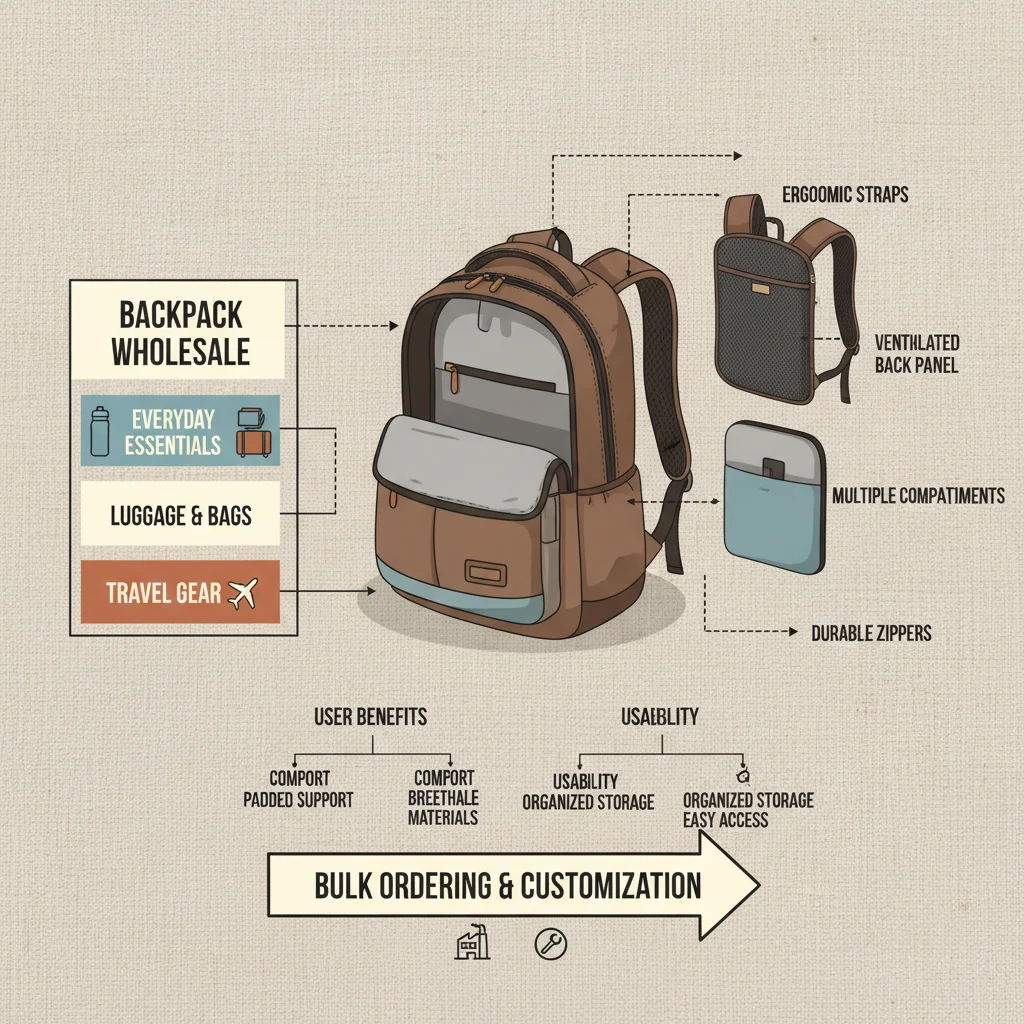
Weight distribution is the most overlooked aspect of professional bag design. When a backpack carries a laptop, charger, and documents, the center of gravity shifts. Professional engineering addresses this through arcuate shoulder straps, which follow the natural curve of the human body to distribute pressure evenly across the trapezius muscles, reducing long-term fatigue during city commutes.
Beyond ergonomics, the interior organization must be optimized for rapid access. A dedicated laptop compartment is no longer a luxury but a technical requirement. This involves utilizing high-density foam padding and secure zippers to protect fragile electronics from impact and friction during transit, ensuring that the internal structure remains stable even when the bag is not fully loaded.
Ventilation is the final pillar of professional design. The implementation of an advanced breathable back system prevents sweat buildup by creating a channeled airflow gap between the wearer and the bag. This is critical for unisex designs intended for multi-scenario use, where the user may transition from a humid outdoor environment to a climate-controlled office.
The choice of exterior fabric determines both the lifespan and the professional image of the bag. Premium Oxford polyester is frequently selected for its high strength-to-weight ratio and its ability to take on a sophisticated matte finish. Unlike basic nylon, industrial-grade Oxford polyester can be engineered for superior abrasion resistance.
Industrial waterproof protection is achieved not just through surface coatings, but through the density of the fabric weave and the precision of the seam sealing, ensuring that internal electronics remain dry during unexpected heavy rain.
Durability is further enhanced by the selection of lining materials. Durable polyester linings prevent internal tears and resist stains, ensuring the interior remains clean over years of use. When combined with high-density exterior shells, the resulting product can extend its material life from the industry standard of 1-2 years to over 3-5 years.
For wholesale distributors, the reliability of the supply chain is as important as the product itself. Quality control must be a multi-stage process—starting from raw material traceability to 100% manual inspection of the finished product. This reduces the defect rate and ensures that every unit meeting the "high-end" designation actually adheres to those standards.
Lead time synchronization is another critical metric. A responsive oem backpack manufacturer provides tiered delivery schedules, such as 7-day rapid turnarounds for small sample orders and negotiated streamlined schedules for bulk wholesale volumes, allowing brands to respond quickly to market trends.
In a typical urban professional setting, a bag must function as a mobile office. This means the 20-39 litre capacity must be optimized not just for volume, but for categorization. For instance, a user navigating from a high-stakes boardroom meeting to an airport terminal needs a secure zipper system for passports and a dedicated space for a laptop that doesn't interfere with clothing or documents.
Beyond the office, the versatility of these products extends to "active professional" lifestyles. A bag designed with high-density Oxford polyester and anti-theft features is equally suited for a student attending lectures or a professional embarking on a weekend hiking trip, provided the ergonomic support can handle the shift in load types.
The next phase of bag manufacturing is moving toward "intelligent minimalism." This involves reducing the physical footprint of the bag while increasing its internal utility. We are seeing a trend toward more adaptive materials that can change their breathability based on the environment and the integration of more discreet anti-theft mechanisms.
Sustainability is also becoming a primary driver in B2B procurement. Brands are increasingly requesting materials that maintain industrial-grade performance—such as waterproof capabilities—while utilizing recycled polymers. The challenge for the oem backpack manufacturer is to ensure these eco-friendly materials do not compromise the 3-5 year lifespan expected of high-end series.
Finally, the customization hub is evolving. Rather than simple logo placement, B2B clients are seeking "deep customization," where the internal architecture of the bag is tailored to specific industry needs, such as specialized compartments for medical tablets or architectural tools, further blurring the line between general luggage and professional equipment.
When evaluating a manufacturing partner, brands must look beyond the unit price. A lower cost per bag often hides deficiencies in material life or quality control that lead to high return rates and low client retention. The real value is found in the "total cost of ownership" for the end-user, where a durable, high-value product justifies a premium wholesale margin.
Comparing standard luggage with high-end series reveals a clear divide in market appeal. Generic bags compete on price, while professional series compete on performance and image. The ability of a manufacturer to provide a comprehensive B2B support system—including SKU management and real-time logistics tracking—is what separates a simple vendor from a strategic partner.
The following framework provides a relative assessment of how high-end manufacturing specifications impact the long-term investment return for luggage distributors.
| Evaluation Metric | Standard Luggage | High-End Series | Business Impact |
|---|---|---|---|
| Material Lifespan | 1-2 Years | 3-5 Years+ | Higher Client Retention |
| Water Resistance | Basic Splash | Industrial Waterproof | Reduced Damage Claims |
| Market Appeal | Generic / Budget | Premium Business | Higher Brand Positioning |
| Wholesale Margin | Competitive/Low | High Value-Added | Increased Profitability |
| Quality Assurance | Random Sampling | 100% Manual Check | Lower Return Rates |
| Customization | Limited / Logo only | Deep Structural OEM | Unique Market Offering |
A high-end business leisure bag is defined by the intersection of professional aesthetics and industrial performance. This includes the use of premium waterproof Oxford polyester for weather protection, an ergonomic arcuate shoulder strap system for weight distribution, and a specialized internal architecture featuring dedicated laptop compartments. Unlike generic bags, these are engineered for a 3-5 year lifespan and a unisex, fashion-forward business look that suits both boardroom and travel environments.
Standard water-resistant fabrics usually rely on a thin surface coating that can wear off over time, offering only basic splash protection. Industrial waterproof Oxford polyester, however, utilizes a higher density weave and often a more integrated treatment process. This ensures that the fabric repels water more effectively during heavy rain, protecting sensitive electronics and documents inside the bag for a significantly longer period of time without degrading.
Brands should evaluate three core areas: Quality Assurance, Lead Time, and Customization Depth. A reliable partner should offer a multi-stage inspection process (including 100% manual checks) to ensure consistency. Lead time synchronization—such as rapid 7-day delivery for small orders—is crucial for market agility. Finally, the ability to provide deep OEM/ODM services, allowing for structural changes rather than just logo updates, is essential for creating a competitive, unique product line.
Yes, if the engineering focuses on "hybrid functionality." This is achieved by combining a sleek, unisex professional exterior with outdoor-grade technical features. For example, using breathable back padding and ergonomic straps allows the bag to be comfortable during a hike or a long city commute, while the waterproof shell and dedicated laptop compartment ensure it remains a functional tool for the office. The key is balancing the 20-39 litre capacity to avoid looking like a camping bag while maintaining the necessary durability.
While budget bags have a lower entry cost, they typically suffer from low client retention due to a short material life (1-2 years). In contrast, high-end series provide a higher value-added margin. Because of their durability (3-5+ years) and superior market appeal, wholesalers can command a premium price. This leads to higher long-term profitability per customer and a stronger brand reputation, as the lower return rate offsets the initial higher procurement cost.
Anti-theft security is integrated through a combination of hidden zipper placements and reinforced closure types. By positioning primary pockets against the wearer's back or using recessed zippers, the manufacturer minimizes the opportunity for pickpocketing in crowded urban environments or public transport. This is paired with high-strength secure zippers that are resistant to tampering, providing peace of mind for professionals carrying high-value electronics and corporate documents.
The transition toward high-end, multi-functional carry solutions is not merely a fashion trend but a response to the changing nature of global professional work. Success in this market depends on the ability to marry industrial-grade durability—such as waterproof Oxford polyester and ergonomic support—with a sophisticated corporate aesthetic.
For businesses looking to scale, partnering with a capable oem backpack manufacturer that prioritizes material traceability and rigorous quality control is the most sustainable path to increasing market share and ensuring long-term client loyalty.

Hit enter to search or ESC to close


If you are interested in our products, you can choose to leave your information here, and we will be in touch with you shortly.